Innovation No. 23 of 77 in the book
Shock Absorbers
Leather suspension made chariot rides smoother
- When
- c. 1323 BCE
- Dynasty
- 18th Dynasty
- Era
- New Kingdom
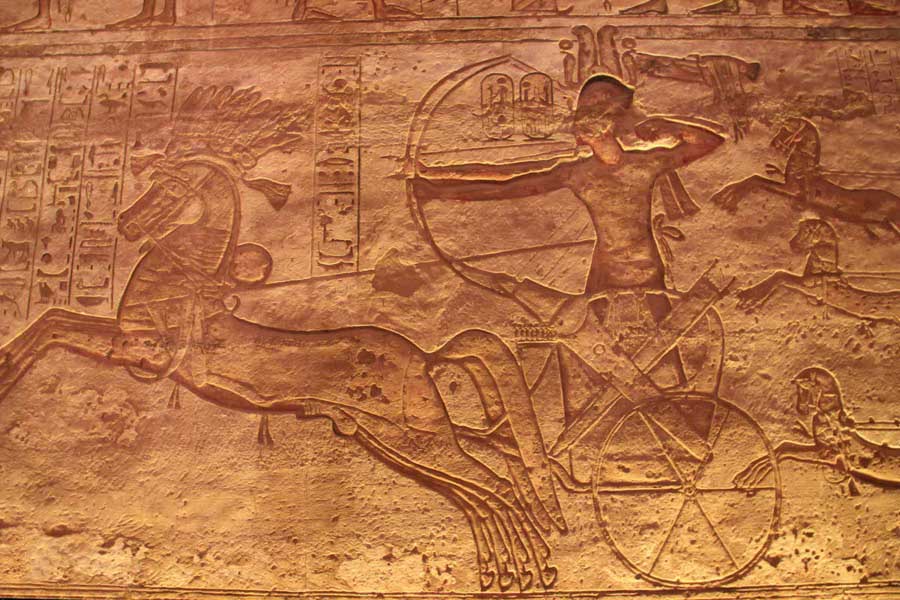
The chariots buried with Tutankhamun, who died around 1323 BCE, were built with the world’s first suspension system.
Egyptian wheelwrights sprang the cab on a flexible platform of leather and bent wood, and set the axle right at the back so the rider stood over the springiest part.
It soaked up the shock of rough ground at speed — the same job the coils and dampers under your car do now.
The idea of cushioning a ride from the bumps in the road was born on an Egyptian battlefield.
Six complete chariots came out of Tutankhamun's tomb in 1922, dated to about 1323 BCE. Mechanical analysis by engineering historians including Joost Crouwel and Bela Sandor found that the floors were not solid wood but a tensioned mesh of rawhide thongs strung over a light frame. The builders also shifted the axle from the middle of the carriage, where Mesopotamian wheelwrights put it, to the very back, which let the long drawbar flex like a leaf spring.
Frequently Asked Questions
What was the suspension actually for?
Shooting. A composite bow needs a steady platform, and a chariot bouncing over rough ground gives you none. The rawhide floor and rear axle together kept the archer stable enough to aim at speed.
How does moving the axle help?
It turns the drawbar into a spring. With the axle at the rear, shocks from the ground travel forward along the pole and are absorbed by its flex and by the horses' harness, instead of jolting straight up through the rider's feet.