Innovation No. 65 of 77 in the book
The Wedding Ring
Rings used as symbols of commitment
- When
- c. 1400 BCE
- Dynasty
- 18th Dynasty
- Era
- New Kingdom
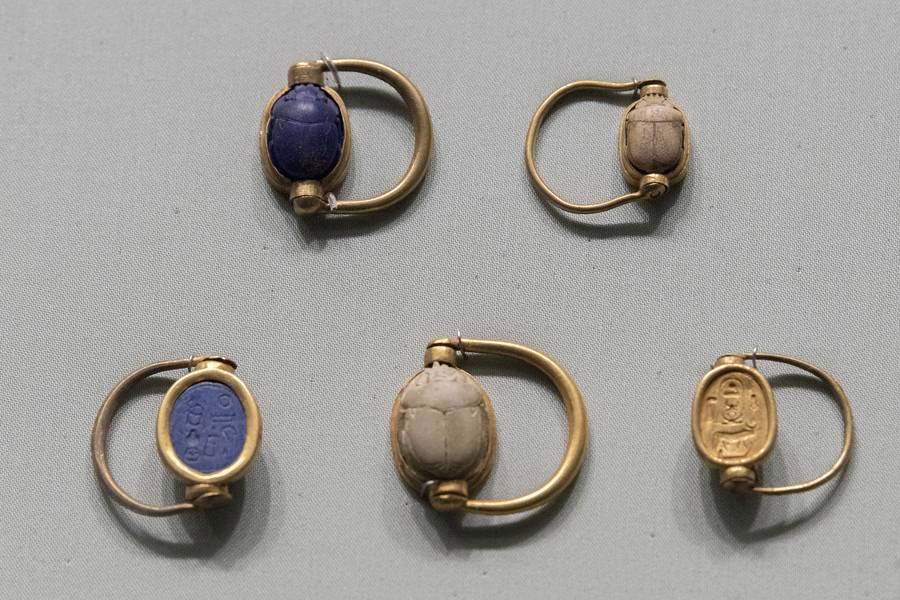
The ring you wear to say ‘married’ is an Egyptian idea, worn by around 1400 BCE in the New Kingdom.
Egyptians gave bands as tokens of a binding agreement, and the circle carried the meaning: no beginning and no end, like the commitment it stood for.
They are also credited with the belief that a vein ran straight from the fourth finger to the heart — which is exactly why the ring sits where it does today.
The wedding ring, and the finger it’s worn on, come from the Nile.
The earliest rings worn as personal seals and marital tokens date to the Old and Middle Kingdoms, with swivel-style signets mounted on metal bands. In Eighteenth Dynasty tombs such as that of Kha and Merit, around 1400 BCE, women were buried wearing gold signet rings on the left hand. Classical writers including Macrobius, and later early church theologians, recorded that the fourth-finger custom came from Egypt.
Frequently Asked Questions
Where does the fourth finger come from?
From an Egyptian belief that a particular vessel ran from that finger straight to the heart. Rome inherited the idea as the vena amoris, the vein of love, and the placement outlived the anatomy.
Did that belief have any lasting legal effect?
It did. Seventeenth-century English marriage law cited Egyptian "anatomy" when it fixed the wedding ring on the left hand — a piece of ancient physiology written into statute.