Innovation No. 68 of 77 in the book
Monotheism
Akhenaten focused worship on a single god, the Aten
- When
- c. 1350 BCE
- Dynasty
- 18th Dynasty
- Era
- New Kingdom
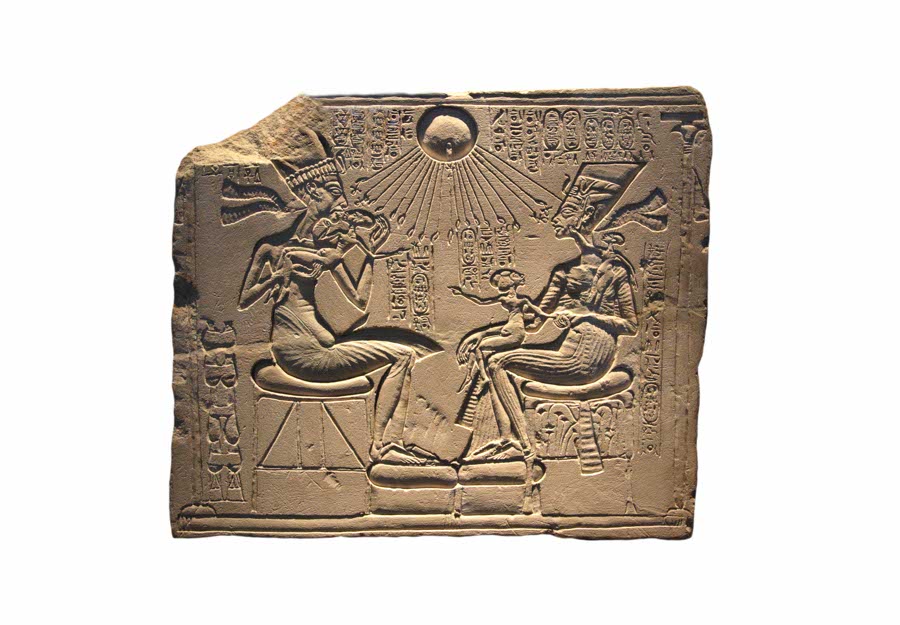
Around 1350 BCE the pharaoh Akhenaten did something no ruler had done: he swept aside Egypt’s crowded pantheon and ordered worship of a single god, the sun-disc Aten.
He closed the old temples, erased other gods’ names, and built a brand-new capital for the one god. It is the earliest state-enforced experiment in monotheism we can document.
It didn’t last — Egypt reversed it after his death — but the idea that there might be only one god was tried, in full, on the Nile first. Whether it shaped later faiths is debated; the innovation itself is not.
The bold idea of one god alone was first decreed by an Egyptian king.
The evidence is the ruin of Akhetaten itself, founded in the fifth year of the reign, around 1348 BCE, occupied for under two decades and then abandoned — which sealed an unusually clean record of boundary stelae, temple foundations and officials' villas. The theology survives in the Great Hymn to the Aten, inscribed in the tomb of Ay, describing the Aten as sole creator, beside whom there is no other.
Frequently Asked Questions
Did ordinary Egyptians follow the new religion?
The evidence says no. In the workers' village at Amarna, inside the homes of the people who built the city, excavators found figurines and amulets of Bes and Tawaret — household gods the king had banned, still being used.
Was this the first monotheism anywhere?
The claim made here is narrower: the earliest state-enforced experiment in worshipping one god that can be documented. Whether it influenced later faiths is genuinely debated, and this book does not settle it.