Innovation No. 40 of 77 in the book
The World's First University
The House of Life as an institutional engine for training, research, and technical transmission
- When
- c. 2000 BCE
- Dynasty
- 11th Dynasty
- Era
- Middle Kingdom
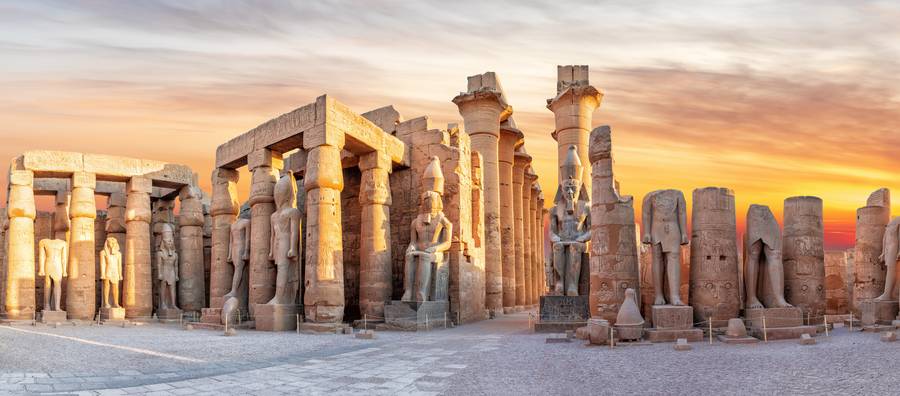
Attached to the great temples was an institution called the Per-Ankh, the ‘House of Life’ — Egypt’s combined research library, archive and training college. They were running by around 2000 BCE.
Inside, scholars copied and preserved texts, trained scribes, physicians and astronomers, and pushed knowledge forward in medicine, math and ritual — all in one place, generation after generation.
That is the core function of a university, two thousand years before Plato’s Academy.
The first institution built to keep and grow knowledge stood beside the Nile.
The Per-Ankh is documented on tomb stelae and in papyri from the Old Kingdom through to the Late Period. Inscriptions from Abydos, Memphis, Heliopolis and Sais describe a state-funded institution attached to a major temple. Papyrus Salt 825 describes it in ritual terms — its symbolic architecture and the sacred work done inside. The institutional picture, who staffed and paid for it, comes instead from administrative papyri and the titles officials carried through their careers.
Frequently Asked Questions
Was it open to the public?
No. Papyrus Salt 825 closes with a warning that its contents were not to be shown to outsiders. Technical rolls on metallurgy, medicine and engineering were held as state property, not shared learning.
What does the name mean?
House of Life. It covered the functions we now split up — library, national archive, scriptorium and training college for scribes, physicians and astronomers — held together in one institution beside the temple.