Innovation No. 18 of 77 in the book
The Rowboat
Oars lashed to fixed pivots, turning paddling into mechanical rowing
- When
- c. 2500 BCE
- Dynasty
- 4th Dynasty
- Era
- Old Kingdom
Paddling pushes water with a free blade. Rowing is different — the oar pivots against a fixed point on the boat, turning your pull into leverage. Egypt made that leap by around 2500 BCE, in the Old Kingdom.
Fixing the oar to the hull multiplies force and lets a crew pull in disciplined unison. Fleets of such boats moved the giant stones and cargo of the pyramid age up and down the Nile.
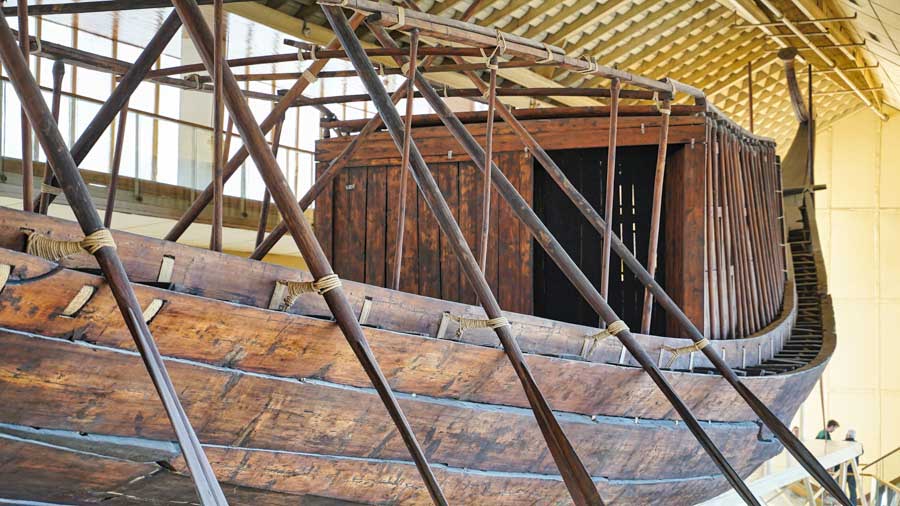
Khufu’s 43-metre cedar ‘solar boat,’ buried beside the Great Pyramid and rebuilt from 1,224 pieces, was made for oars.
Every rowing crew, from ancient galley to Olympic eight, is using an Egyptian idea.
Paddles are far older than Egypt — wooden ones from South Korea are about 8,000 years old, and nobody disputes that. What the Nile preserves is the earliest clear picture of organised rowing. Old Kingdom reliefs around 2500 BCE, in the tomb of the official Ti at Saqqara and in Sahure's temple at Abusir, show thick rope loops tying each oar to a peg on the boat's edge, every crewman facing the stern, and a boat-master beating time.
Frequently Asked Questions
What exactly is the Egyptian first here?
Not the oar by itself. The move from paddling to levering an oar against a fixed point may have happened in more than one place. What Egypt shows first is the whole system: rope rowlocks, crews of dozens pulling in unison, and a caller keeping the beat.
Is there a surviving Egyptian rowing vessel?
Yes. Khufu's 43-metre cedar boat, buried beside the Great Pyramid and rebuilt from 1,224 pieces, was built to be rowed.