Innovation No. 38 of 77 in the book
Multilingual Decree
One message written in three different scripts
- When
- c. 196 BCE
- Dynasty
- Ptolemaic Dynasty
- Era
- Ptolemaic Period
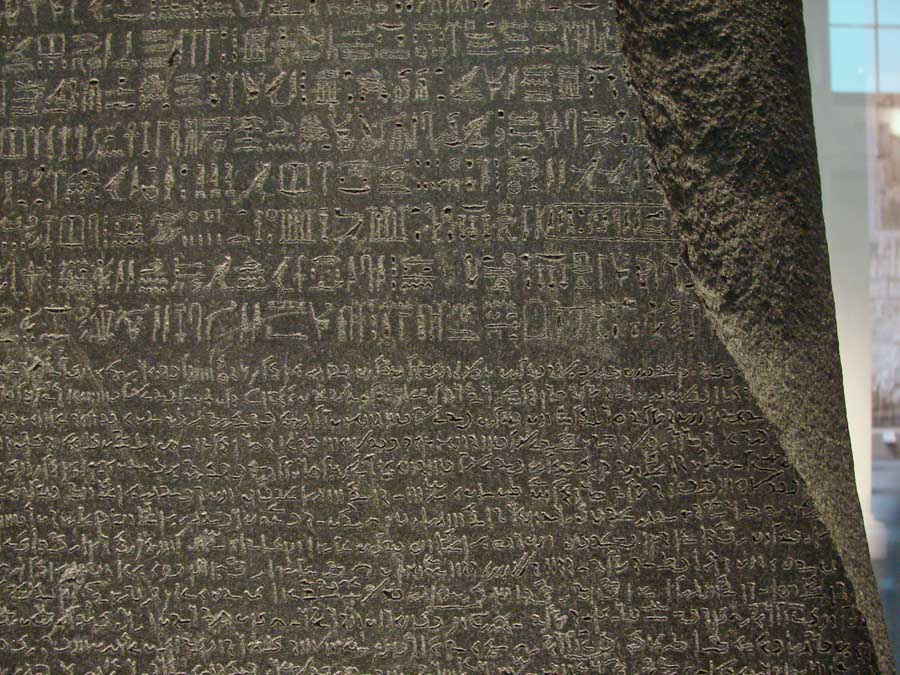
The Rosetta Stone carries one ordinary priestly decree, issued in 196 BCE under Ptolemy V — written three times over, in three scripts: hieroglyphic, everyday Demotic, and Greek.
It was made trilingual so every audience in Egypt could read the same official message. That is the first multilingual public document in the modern sense.
Because the three versions say the same thing, it became the key that finally cracked hieroglyphs in 1822 — reopening 3,000 years of silent writing.
The world’s most famous translation was carved on an Egyptian stone.
The Rosetta Stone is one of a documented class called the Ptolemaic Synodal Decrees — proclamations issued by gatherings of Egyptian priests together with the Macedonian Greek royal house. Several trilingual stelae in the series are older: the Decree of Canopus, 238 BCE, survives in more than one fully intact copy, and the Decree of Raphia dates to 217 BCE. The Rosetta Stone is the Memphis Decree of 196 BCE, and all of them follow the same three-register template.
Frequently Asked Questions
So the Rosetta Stone wasn't the first of its kind?
No, and the book does not claim it was. It is the most famous surviving example of an established format. The Canopus and Raphia decrees are both earlier, and Canopus is better preserved.
Did another stone confirm the decipherment?
Yes. Karl Richard Lepsius found the Decree of Canopus at Tanis in 1866, complete and undamaged. Because it was intact, it provided the independent check that proved Champollion's method had been right.