Innovation No. 37 of 77 in the book
Cursive Handwriting
Hieratic script used for fast, everyday writing
- When
- c. 3000 BCE
- Dynasty
- 1st Dynasty
- Era
- Early Dynastic Period
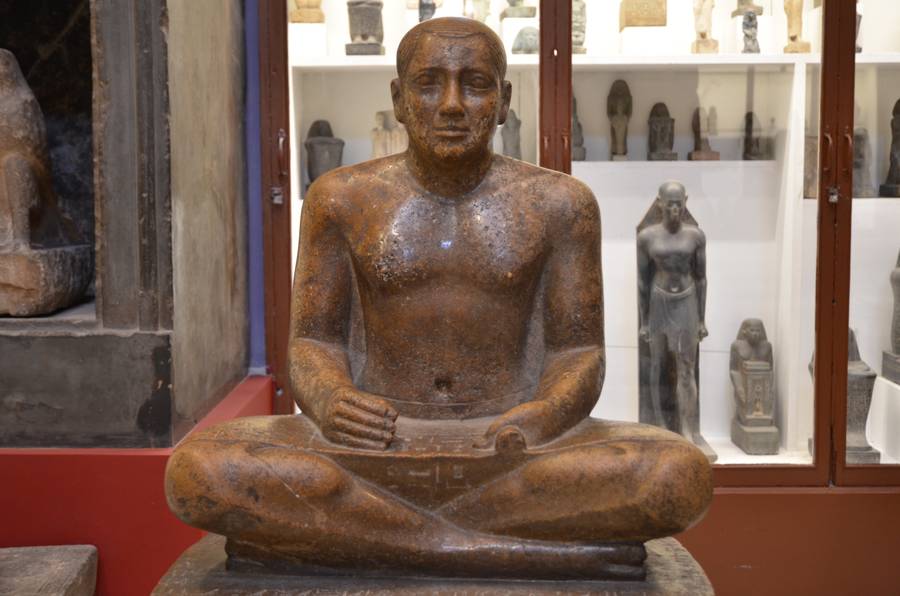
Formal hieroglyphs were beautiful and painfully slow to draw. So Egyptian scribes invented a fast, flowing shorthand — hieratic — almost as early as the hieroglyphs themselves, around 3000 BCE.
The picture-signs were simplified into quick, joined pen-strokes you could write at speed, the way our printed letters loosen into looping cursive.
This was the everyday hand: letters, accounts, contracts, stories — the script of real working life, not monuments.
Cursive — writing built for speed — was first dashed off by Egyptian scribes.
Hieratic develops alongside monumental hieroglyphic writing rather than after it, from around 3000 BCE. Carved pictograms were simply too slow for daily administration, so scribes abstracted the signs into rapid ink strokes. The result, and later Demotic, is what carried Egypt's working record — mathematics, astronomy, surgical medicine and accounts — and it is the reason so large a body of Egyptian technical writing survives at all.
Frequently Asked Questions
Is hieratic a different language?
No. It is the same language in a faster hand — the relationship printed letters have to looping handwriting. A reader trained in one can work out the other, which is how the scripts were deciphered together.
Where can you see the two scripts side by side?
On the Rosetta Stone. Hieroglyphic sits at the top for the gods, Demotic in the middle for everyday administration, Greek at the bottom for the ruling dynasty. Demotic earned its place because it was the living hand merchants and lawyers actually read.