Innovation No. 67 of 77 in the book
Judgment After Death
A heart weighed against a feather to judge the soul
- When
- c. 1250 BCE
- Dynasty
- 19th Dynasty
- Era
- New Kingdom
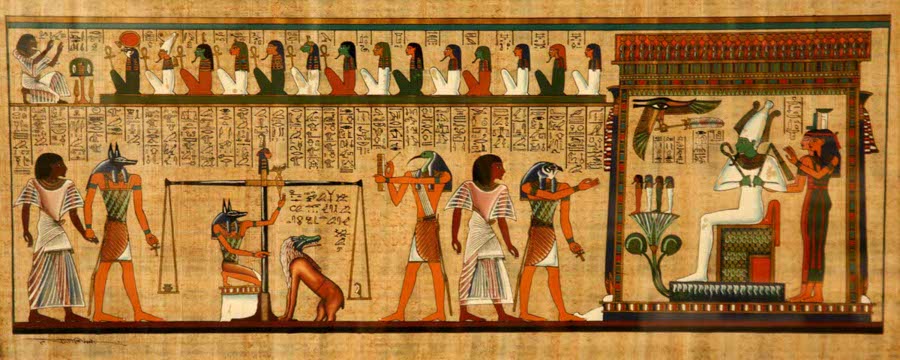
Egypt gave the world one of its oldest images of a moral reckoning after death: the heart weighed on a scale, in its classic form around 1250 BCE.
In the scene, the dead person’s heart is set against a single feather — the feather of truth. Live justly and your heart balances light; live badly and it tips, and a waiting monster devours you.
It is a startlingly clear idea: you are judged after death by the weight of how you lived. Later religions would echo it for millennia.
The moral final judgment, pictured as a set of scales, was drawn first in Egypt.
The ceremony is codified in Spell 125 of the Book of the Dead, from the start of the Eighteenth Dynasty, around 1550 BCE. Earlier Old and Middle Kingdom texts do speak of the dead being judged by gods, but the scales themselves — the heart weighed against the ostrich feather of Ma'at — are a New Kingdom innovation. The scene survives in dozens of papyri, including the Papyrus of Ani.
Frequently Asked Questions
Did other cultures have anything comparable?
Not in this form. Mesopotamian and Bronze Age Greek underworlds were generally bleak, undifferentiated places where the good and the wicked shared the same shadowy fate. Individual judgement measured by weight has no contemporary parallel.
Could you improve your odds?
Egyptians thought so. Fearing that their own heart might testify against them, they placed a large green heart scarab over the mummy's chest, its underside inscribed with Spell 30B — a command to the heart to stay silent.