Innovation No. 8 of 77 in the book
The Toothbrush
A chewed twig used to clean the teeth
- When
- c. 3000 BCE
- Dynasty
- 1st Dynasty
- Era
- Early Dynastic Period
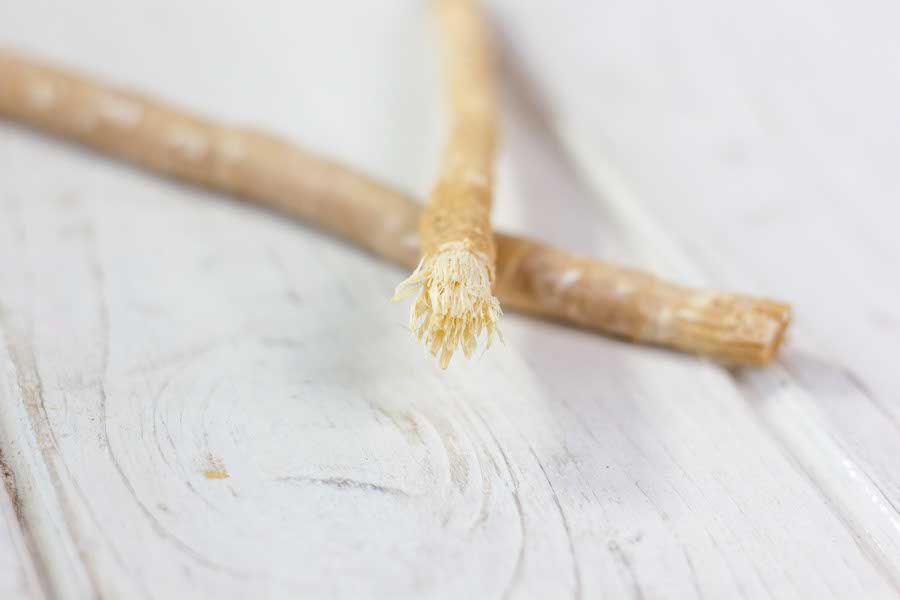
Before bristles there was the chew stick: a twig frayed at one end into soft fibers and rubbed across the teeth. Egyptians were using them by 3000 BCE, at the very start of the dynasties, and were buried holding them.
The trick is the wood. Twigs from certain trees carry natural antiseptics that fight the bacteria behind decay and gum disease.
The same tool, the miswak, is still sold and chewed across much of the world — and modern studies rate it as effective as a nylon brush.
The world’s first toothbrush was a stick that fought germs before anyone knew germs existed.
Chew sticks have been recovered from graves of the late Predynastic and Early Dynastic periods, frayed at one end into loose fibres and showing clear abrasive wear. Modern analysis of those fibres has identified natural fluoride, silica and calcium in the wood — compounds that strengthen enamel and work against gum disease. Many were cut from Salvadora persica, a tree whose sap carries its own antimicrobial agents.
Frequently Asked Questions
How was a stick turned into a brush?
By chewing. One end was worked between the teeth until the wood fibres split into a soft fringe, which was then loaded with tooth powder. The opposite end stayed pointed and served as a toothpick.
Is the same tool still in use?
Yes — sold as the miswak across much of Africa, the Middle East and South Asia. Clinical studies rate it as effective as a nylon toothbrush for removing plaque.