Innovation No. 74 of 77 in the book
The Peace Treaty
Egypt and the Hittites signed a formal treaty
- When
- c. 1259 BCE
- Dynasty
- 19th Dynasty
- Era
- New Kingdom
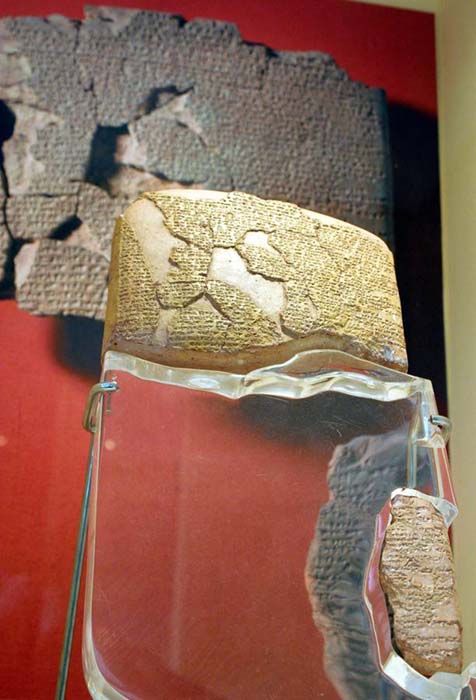
The oldest surviving peace treaty in the world was signed between Egypt and the Hittite Empire in 1259 BCE, after the two fought to a bloody draw at Kadesh.
Both sides swore to stop fighting, to defend each other, and to return refugees. Each kept a copy — Egypt’s carved on a temple wall, the Hittites’ on a clay tablet — and the two texts match.
It is so foundational that a replica hangs at the United Nations in New York today.
International diplomacy’s founding document was written, in part, in Egypt.
The treaty was engraved on silver tablets, and those are lost. What survives is the Egyptian version carved in hieroglyphs at Karnak and the Ramesseum, and the Akkadian version on clay tablets recovered at Hattusa. Having both sides' copies is what makes it verifiable: two independent archives, two languages, one agreement, signed in 1259 BCE by Ramesses II and Hattusili III.
Frequently Asked Questions
Do the two versions actually agree?
Substantially, yes — which is the point. Each empire kept its own copy in its own language and its own script, and the texts can be set side by side and checked against each other.
Is there anything unusual about who signed it?
One thing. The Hittite queen Puduhepa's personal seal appears alongside her husband's. She was a consort rather than a monarch in her own right, yet she corresponded with Ramesses II directly, and no other Bronze Age treaty carries a woman's seal this way.