Innovation No. 2 of 77 in the book
Forensic Science
Embalmers examined bodies to understand injuries and cause of death
- When
- c. 1150 BCE
- Dynasty
- 20th Dynasty
- Era
- New Kingdom
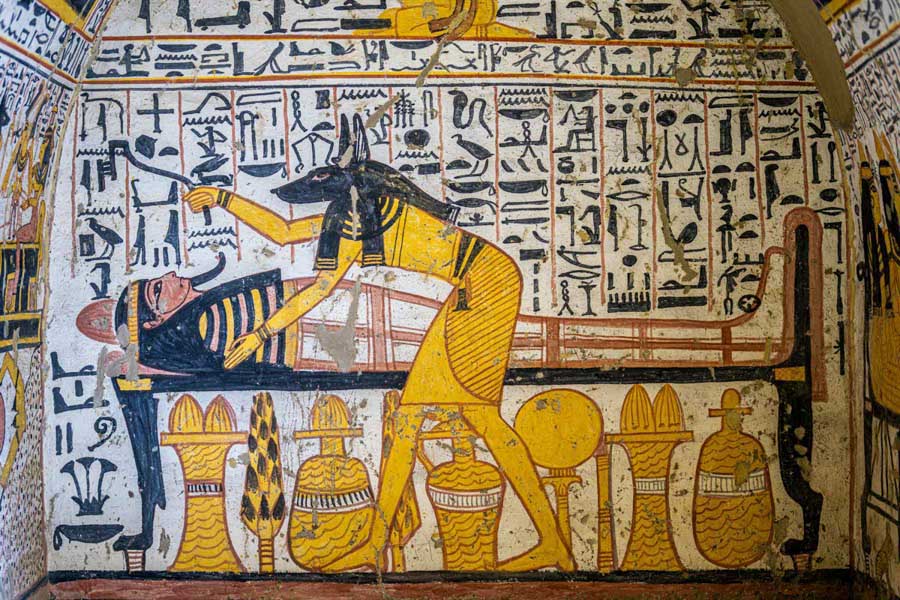
To wrap a body for eternity, Egyptian embalmers had to open it — and in doing so they became the first people to study the human body from the inside. By the New Kingdom, around 1150 BCE, this was skilled, routine work.
They knew where every organ sat, how to draw the brain out through the nose, and how a healthy liver looked against a diseased one. Injuries told stories too: a caved skull, a blade’s angle, bones broken before death or after.
Modern autopsies of royal mummies still read those clues — the slit throat of Ramesses III, hidden under his wrappings for 3,000 years, was found exactly this way.
Long before the word ‘autopsy’ existed, Egypt was reading the dead for the truth.
Embalmers reached the organs through a cut only about four inches long, low on the left side of the belly. Examinations of New Kingdom mummies, roughly 1550 to 1077 BCE, show they worked without severing the major blood vessels. The Greek physician Herophilus is credited with the first recorded scientific dissections, at Alexandria in the 200s BCE — more than a thousand years later.
Frequently Asked Questions
Did Egyptians perform autopsies the way we understand them?
No. There was no examination to establish a cause of death. The anatomical skill came from embalming instead — the same procedure repeated thousands of times, which gave them a reliable working map of the body's interior.
What proves they understood what they were looking at?
Their own vocabulary. The Ebers and Edwin Smith papyri carry detailed names for internal organs and for individual bones of the skull. That terminology could only come from routine, direct observation.