Innovation No. 1 of 77 in the book
Evidence-Based Medicine
Medical cases recorded step-by-step on the Edwin Smith Papyrus
- When
- c. 1600 BCE
- Dynasty
- 2nd Intermediate Period
- Era
- Between the Middle & New Kingdoms
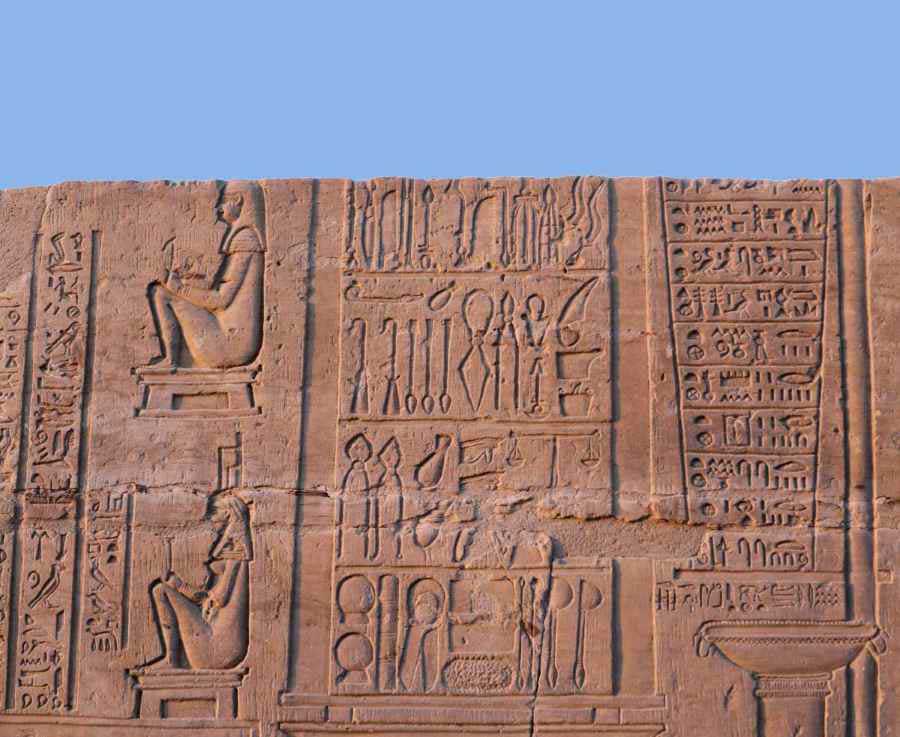
Egyptian doctors were examining patients and writing down what they found more than a thousand years before Hippocrates. The proof is the Edwin Smith Papyrus, a surgical scroll from the Second Intermediate Period, around 1600 BCE — itself copied from a text roughly five centuries older.
It records 48 injury cases. Forty-seven contain no magic at all. Each follows the same fixed template: title, examination, diagnosis, prognosis, treatment — the direct ancestor of the chart your doctor fills out today.
The treatments are real medicine: stitches for open wounds, splints for fractures, honey packed on as an antiseptic. One case describes the brain — the first time the word appears in writing anywhere — and notes that it pulses.
This is the moment medicine stopped being ritual and became method.
The scroll was bought in Luxor in 1862 and first translated by James Henry Breasted in 1930. It runs about five metres. The copy that survives was written around 1600 BCE, but its wording is archaic — the grammar of a scribe copying something far older, which Egyptologists place near 2500 BCE. Mesopotamia's diagnostic handbook, the Sakikku, was compiled some five centuries later and still blamed illness on sin and demons.
Frequently Asked Questions
How do we know the text is older than the scroll itself?
The surviving copy dates to about 1600 BCE, but it is written in grammar and vocabulary that had already gone out of use by then. That is the signature of a scribe copying an older document. The original is placed in the Old Kingdom, roughly 2500 BCE.
Was Egyptian medicine free of magic?
No, and this book does not claim it was. Spells and remedies sat side by side in Egyptian life. What sets this one scroll apart is that 47 of its 48 cases contain no magic at all — the writer judges the injury from what he can see and feel.