Innovation No. 64 of 77 in the book
Codified Ethics: Ma’at, the Cosmic Blueprint
Ma’at as the guiding idea of order and ethics
- When
- c. 2400 BCE
- Dynasty
- 5th Dynasty
- Era
- Old Kingdom
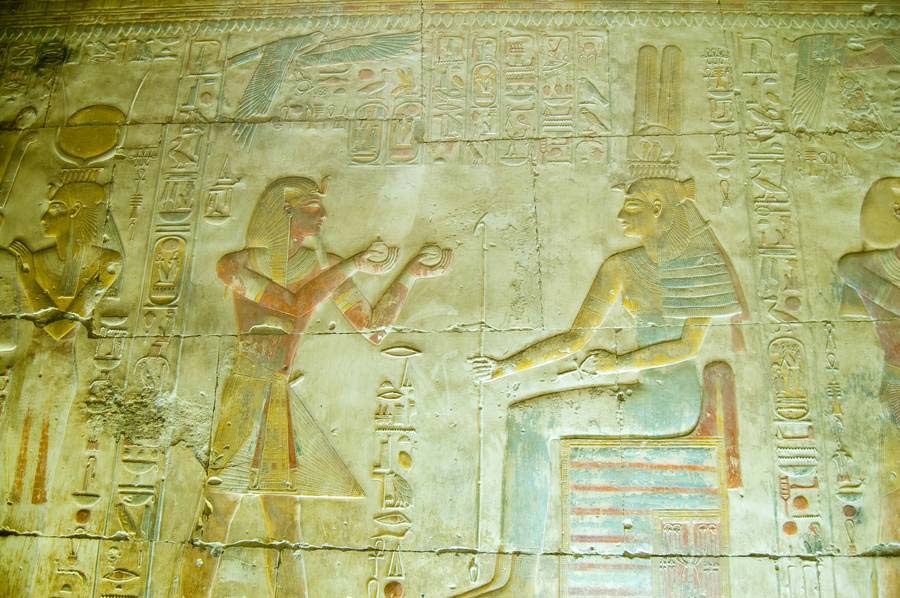
Egypt wrapped the whole idea of right living into a single concept — Ma’at, meaning truth, balance and justice — fully formed in its writings by around 2400 BCE.
Ma’at held that the universe runs on order, and every person’s job is to uphold it: speak truth, deal fairly, don’t cheat the weak. It bound pharaoh and farmer alike.
It is one of the earliest systems of ethics — a written moral code centuries before the Greek philosophers or the Ten Commandments.
The idea that living justly keeps the world in balance was written first on the Nile.
Ma'at appears in the Pyramid Texts, cut into royal tomb walls from the Fifth Dynasty around 2400 BCE, described as the order established at the moment of creation. By the Sixth Dynasty it was set out as practical instruction in the Maxims of Ptahhotep. Sumer produced wisdom literature too — the Instructions of Shuruppak is older still — so what is distinctive here is the binding of personal conduct to the order of the cosmos as one system.
Frequently Asked Questions
Was Egypt first to write down ethical instruction?
No. Sumerian wisdom literature is older, and the book says so. The Egyptian contribution is the framework: a single concept tying how you treat people to whether the universe holds together.
Did the word mean anything outside ethics?
Yes, and the overlap is the point. Ma'at also named the straight edge of a builder's rule and the true line of a plumb bob. Building something sound and living rightly were described with the same word.