
Innovation No. 27 of 77 in the book
The Architectural Column
Stone columns shaped after bundled reeds
- When
- c. 2670 BCE
- Dynasty
- 3rd Dynasty
- Era
- Old Kingdom
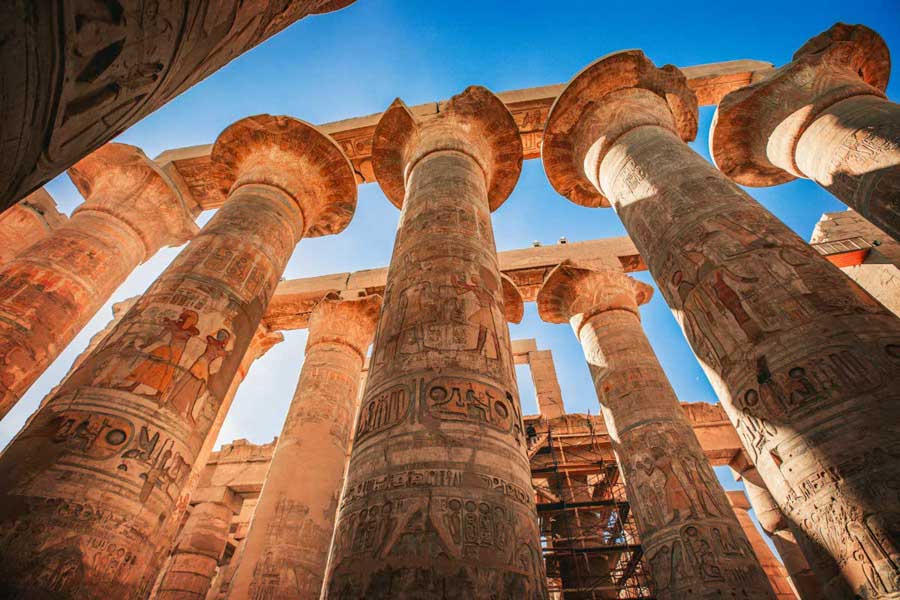
Around 2670 BCE, Egyptian builders under the architect Imhotep did something no one had done: they raised columns of cut stone. It happened at Djoser’s Step Pyramid complex, at the start of the Old Kingdom.
The earliest ones imitate bundles of reeds and papyrus stalks, frozen in limestone — plants that once held up mud huts, now holding up temples in stone.
From there grew the hypostyle hall, a ‘forest’ of carved columns like Karnak’s 134 giants — ancestor of every colonnade, from Greek temples to bank façades.
The stone column, backbone of monumental architecture, was first quarried on the Nile.
They stand in Djoser's Step Pyramid complex at Saqqara, around 2670 BCE. The French archaeologist Jean-Philippe Lauer uncovered the colonnade of engaged stone columns lining the entrance corridor in the early twentieth century. Earlier cultures in Mesopotamia raised pillars too, but from wood, mud-brick or asphalt-sheathed cores. Saqqara holds the earliest known structural columns cut from stone.
Frequently Asked Questions
What does "engaged" mean here?
That the columns are still attached to the wall behind them rather than standing free. It was a cautious first step: Egyptian builders were carrying a plant form into a brand-new material and did not yet trust stone to stand alone.
Did Greek columns borrow from these?
The resemblance is hard to miss. The vertical grooves on a Doric column — fluting — imitate bundled plant stalks, which is precisely what Imhotep was carving twenty-one centuries earlier at Saqqara.