Innovation No. 10 of 77 in the book
Chemistry
Embalming workshops functioned like early chemical labs, the word “chemistry” traces back to Kemet
- When
- c. 2600 BCE
- Dynasty
- 4th Dynasty
- Era
- Old Kingdom
The word ‘chemistry’ may trace back to the ancient name of Egypt itself — Kemet, ‘the black land,’ after the dark Nile soil. The craft it names was being practiced here by the Old Kingdom, around 2600 BCE.
Egyptian embalming workshops were, in effect, the first chemical labs: dissolving, drying and blending natron salts, resins and oils to precise, repeatable recipes.
The same know-how produced makeup, dyes, glass and medicine — matter deliberately transformed, step by measured step.
The very name of the science points back to the Nile.
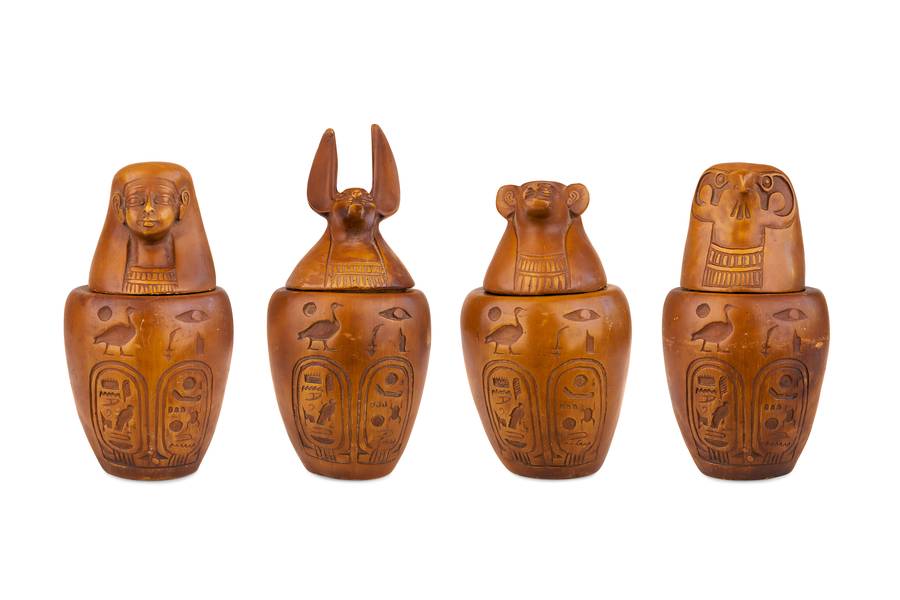
A 2023 study in Nature, led by Maxime Rageot, analysed 31 ceramic vessels from an embalming workshop at Saqqara. The jars carried written instructions such as "to put on his head" or "to wash". Residue inside showed deliberate blends of pine resin, mastic, beeswax, animal fat and plant oil, mixed differently for different organs and tissues — recipes being followed, not guesswork.
Frequently Asked Questions
What makes an embalming workshop a chemistry lab?
Labelled containers, fixed recipes, and treatments matched to a specific job. The Saqqara jars show substances purified, blended to a formula and applied to a chosen target, which is the working definition of applied chemistry.
Is the word "chemistry" really Egyptian?
The link is probable, not proven. The likeliest route runs from Kemet, the black land, through Greek and then Arabic al-kimiya. Other scholars prefer a Greek origin in khymeia, to pour or fuse. Both readings remain in play.