Innovation No. 55 of 77 in the book
Haute Cuisine
From foie gras to cheese-making in pharaonic kitchens
- When
- c. 2500 BCE
- Dynasty
- 4th Dynasty
- Era
- Old Kingdom
Fine dining as an art — rich dishes prepared to impress — was flourishing in Egyptian elite kitchens by around 2500 BCE.
They force-fed geese to fatten their livers, the very technique behind foie gras; made cheese; and laid on elaborate feasts of roast fowl, breads, fruit, honey cakes and wine.
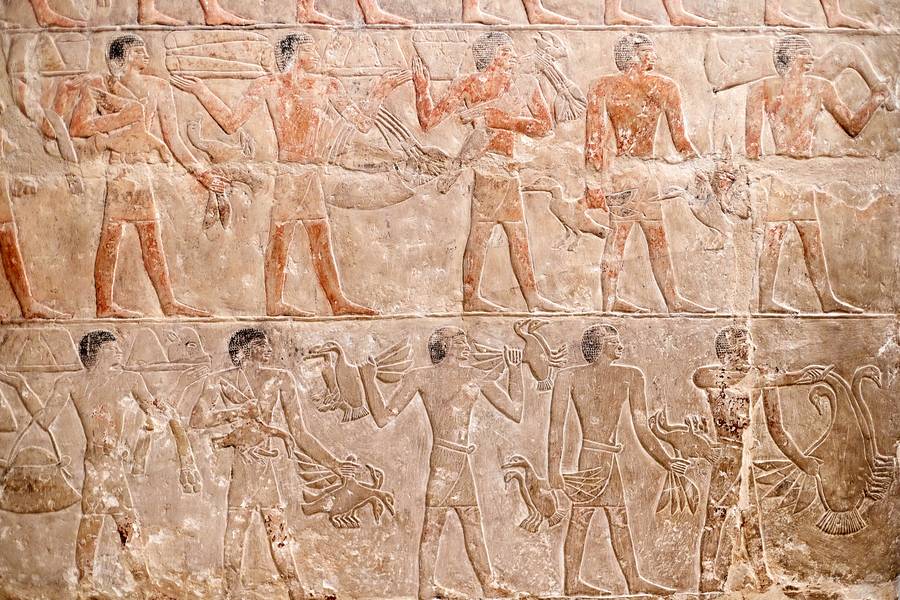
Tomb scenes show whole kitchen brigades at work, and the dead were given menus of gourmet food to enjoy for eternity.
Gourmet cooking, foie gras included, was on Egyptian tables 4,500 years ago.
Old Kingdom tomb walls at Saqqara, around 2500 BCE, show workers force-feeding geese with moist grain pellets. In 2018, chemical analysis of a 3,200-year-old jar from the Tomb of Ptahmes at Saqqara identified solid cheese residue made from a blend of cow and sheep milk — the oldest solid cheese ever analysed.
Frequently Asked Questions
Is the foie gras connection real?
The technique is the same one: geese fattened deliberately by hand-feeding grain, shown on the tomb wall step by step. Whether the Egyptians prized the enlarged liver specifically, as French cooking does, is not something the reliefs settle.
Was there such a thing as a professional kitchen?
Yes. Scenes in the tomb of Rekhmire show specialised staff working a large household kitchen at once — roasting fowl, straining and shaping dough, and managing the jars a feast on that scale demanded.